

Reutersgate
Lebanon, July 12, 2006. The kidnapping of two Israeli soldiers triggered an Israeli offensive against the Hezbollah terrorist group. In the midst of the conflict, the renowned international agency Reuters publishes a photograph that goes around the world and makes the cover of The New York Times.
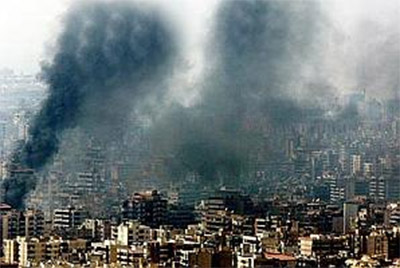

 The following day, Reuters itself, for the first time, issued a “picture kill”, a request that the image not be used by other media. Reuters justified itself by saying that it had received the image, already manipulated, from a local photojournalist (Adnan Hajj). The image was not a unique or exclusive case. It was not a unique case. Throughout the conflict, there were complaints and accusations of image manipulation with excessive “production” to increase drama. Fake News had reached photographs.
Other examples like this followed.
The Reuters Agency removes a second doctored photograph. The photo reportedly shows an F16 fighter plane in the skies over Lebanon firing missiles, having been distorted to make it appear as if it was firing many missiles. However, the plane in the image is only firing one defensive flare, the others being copies of the first.

Reuters withdraws the images and removes from its database all photographs by this author, Adnan Hajj, announcing that it would establish a more rigorous policy for evaluating images of the conflict in the Middle East.
On July 27, 2006, The New York Times published an article by Tyler Hicks that showed images of a dead man being rescued after an air raid on the city of Tire. In the caption of the photo, it is said that bodies are still found under the wreckage of the air attack, calling for an end to the bombing by Israel. However, as it was later understood, this is a fraud, given that the same man appears in other photographs after the attack, pointing and moving around the wreckage.
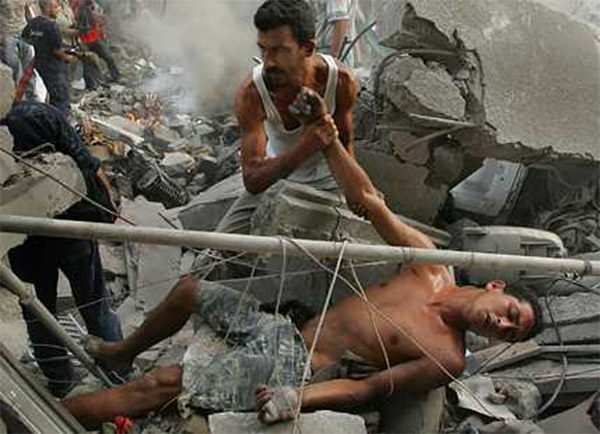
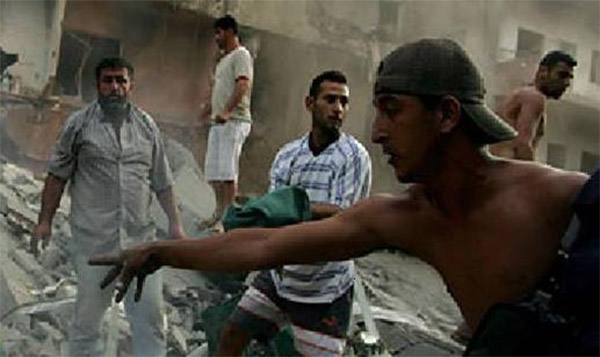
In Beirut, after an attack by Israel, Hezbollah creates a visual campaign, with stuffed animals cleaned under the rubble of the city, changing the narrative to a massacre of innocent Lebanese citizens.
